The rigid parts of an animal that serve to support
or protect the soft parts of the body constitute the skeleton.
There are two types of skeleton. (i) When the hard material
is formed mainly on the outside of the body, it is called exoskeleton.
The muscles are attached to the inner surface of exoskeleton (e.g.,
insects, crabs, crustaceans etc.). (ii) The endoskeleton
is built within the body of the animals, surrounded by soft tissues,
and have muscles attached to their outer surface. It is made of
bone and cartilage (e.g., vertebrate skeleton).
In vertebrates (e.g., man), the skeleton forms
the internal framework of the body. The skeleton is important
and its basic functions are support, protection, movement
and locomotion, muscle attachment, hemopoiesis (blood cell formation)
and storage of calcium and phosphate in bones.
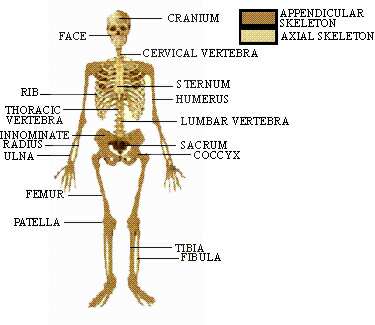
Figure 20.1 Principal subdivisions of the human
skeleton