|
PinkMonkey Online Study Guide-World History
6.2 Immediate Cause
As the various grievances piled up, only a spark was needed to start the revolution
Boston Tea Party (December 16, 1773)
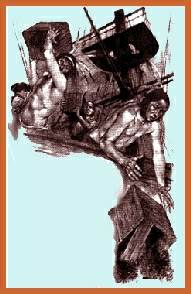
Exhibit 6.1
The ‘Boston Tea Party’
The British government had retained the tax on tea, as
it wanted to retain its right to tax the colonies despite constant
opposition from the colonists. Further Lord North attempted to help
the East India Company to dispose of its large stock of tea by selling
it to the colonies. Popular opposition to this move followed and the
colonial leaders prevented the unloading of tea in the colonial ports.
In Boston, Samuel Adams and his followers stealthily entered the ships
of the East India Company, disguised as Mohawk Indians. They then
threw all the chests of tea into the water. The news of this ‘Boston
Tea Party’ spread to many other ports. Firm action was taken by the
British Parliament by bringing the colony of Massachusetts under the
direct control of England, by annulling its Charter, 1774.
[next page]
|
Index
6.0 Introduction
6.1 Causes of the American Revolution
6.2 Immediate Cause
6.3 Course of the American Revolution
6.4 Reasons for American Success
6.5 Consequences of the American Revolution
6.6 Significance of the American Revolution
6.7 Dates & Events
6.8 Points to Remember
Chapter 7
|